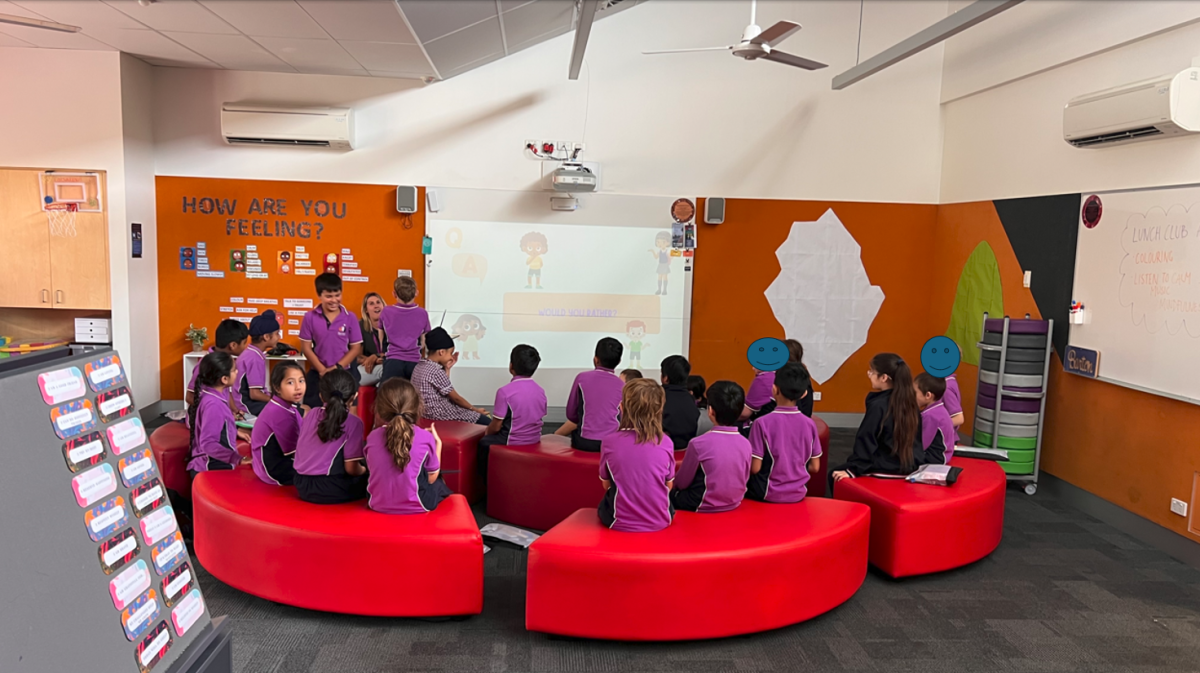
Wellbeing & Inclusion
School Wide Positive Behaviour Support (SWPBS)
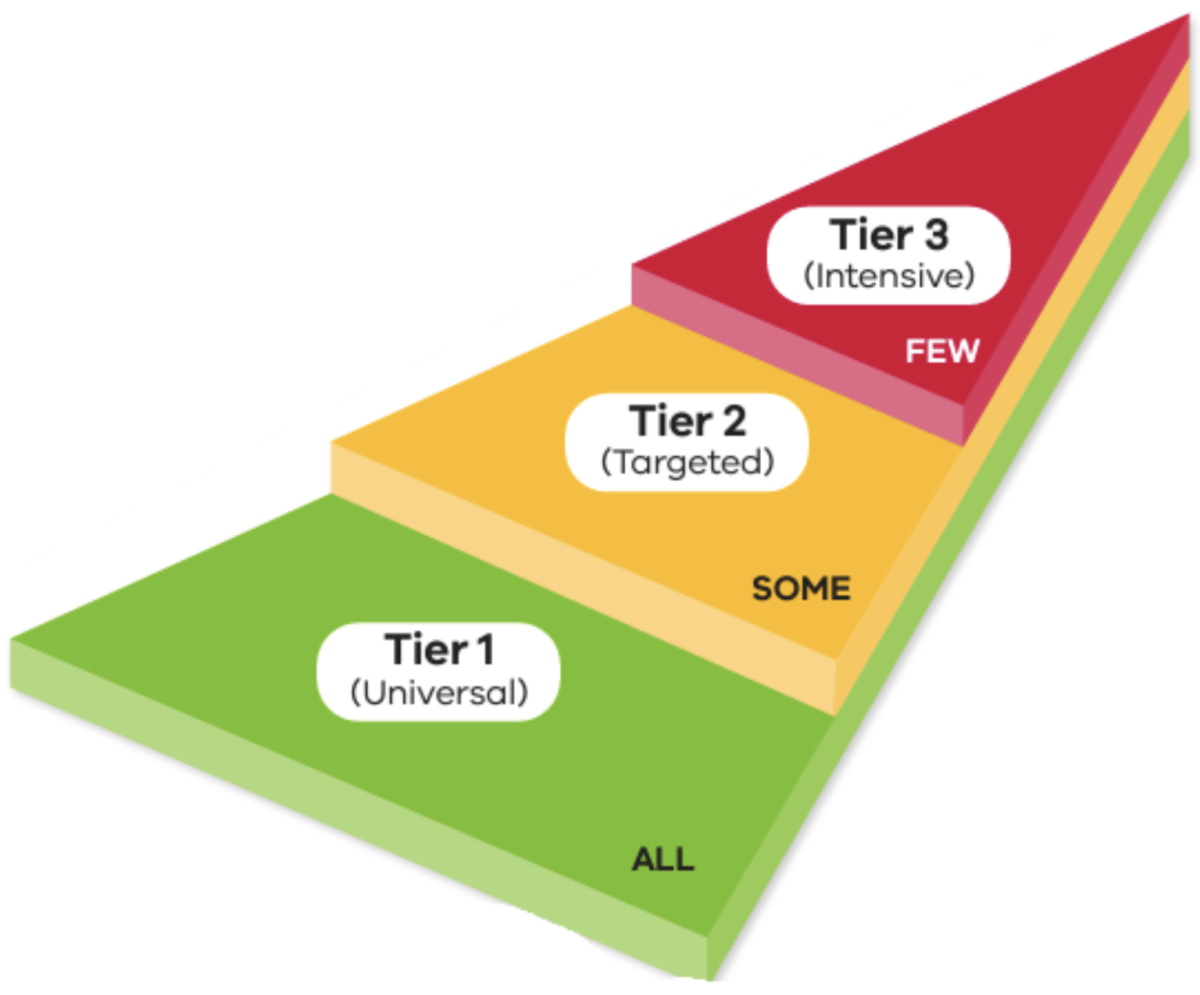
At Barton Primary School, we know that SWPBS is an evidence-based school improvement approach that creates a positive and supportive learning environment for all students. It focuses on teaching and reinforcing the expected behaviours required for students to be safe, known and successful members of our school community. We understand that all students come to school with varied experiences and capabilities, and SWPBS provides targeted assistance to students who need extra support, leading to a more successful and inclusive learning community. When implemented well, SWPBS uses a multi-tiered system of support (MTSS) (pictured) to ensure that all students receive the kind of support they need to maximise behavioural, wellbeing and academic growth.

We are committed to fostering an environment where our values empower our students to excel academically and personally while becoming responsible, compassionate, and engaged members of society. Our school values are Be Safe, Be a Learner, Be Respectful & Be Kind.
These values are widely displayed and explicitly taught to all students in all classrooms – beginning in Prep, continuing across the grade levels and extending to all Specialist subjects. This ensures a consistent and predictable understanding for all members of our school community.
For more information about SWPBS, please refer to the Barton Primary School SWPBS Handbooks below:
Teaching Expected Behaviours
The ‘hidden’ social curriculum that requires students to observe and figure out what is expected creates confusion and inefficiencies leading to unexpected behaviour. Traditionally, teaching social behaviour has consisted of stating the rule, expecting students to always follow the rule and then providing negative consequences when the rule was not followed. Using this approach to teach academics – for example, teaching the maths formulas to calculate the area of a square and then isolating a student who did not remember the rule – would not be considered an effective instructional approach. Our SWPBS Matrix of Expectations can be considered our social behaviour curriculum. Changing behaviour requires time and commitment and a consistent approach. To support that, our reinforcements are school wide, our expectations are school wide, and the responsibility to uphold and reinforce these expectations is school wide. Expectations are taught simultaneously across the school to support our ‘Value of the Week’, and are linked to a higher rate of reinforcement (two Dojo points instead of the usual one).
Please refer to the Matrix of Expectations for a full list of the Barton Primary School expected behaviours.
Ready To Learn
Ready to Learn is a Tier 1 program that runs during the first two weeks of a new school year and the first week of each term, aimed at laying the foundations for learning and classroom culture. It includes collaboration and teamwork, professional relationship building between students and staff, reviewing Child Safe practices, introducing the Zones of Regulation and teaching social behaviours. For initial skill acquisition of social behaviours, lesson plans are created using the instructional model of ‘Tell, Show, Practice’. As students work towards generalising the behaviour skill to other settings, they are provided ongoing support or scaffolding with:
- Pre-corrects
- Reminders
- Active supervision
- Observational feedback.
Lesson content in Ready to Learn is primarily guided by the age of the students and their prior learning histories. Our staff use a variety of resources, scaffolds and teaching strategies to help students become fluent with procedures, routines and specific behavioural skills. Examples might include:
- Role playing and rehearsal
- Playing games that include use of the skill
- Watching videos of examples and non-examples
- Drawing images of the skills in practice at school
Positive Acknowledgement System
When a behaviour is followed by a positive consequence (i.e. reinforcement), then that behaviour is more likely to occur again in the future. At our school, students are extrinsically motivated using Class Dojo as the positive acknowledgement system. Class Dojo points are given out to students to reinforce the whole school values when expected behaviours are displayed. It refers to the Matrix of Expectations within all areas of our schools grounds and community. The use of Class Dojo extends across the school, and students are encouraged to make the link between their behaviour and the earning of points by adding on the points themselves. Once students have earned a certain amount of points they can redeem these points for rewards.
Social Emotional Learning (SEL)
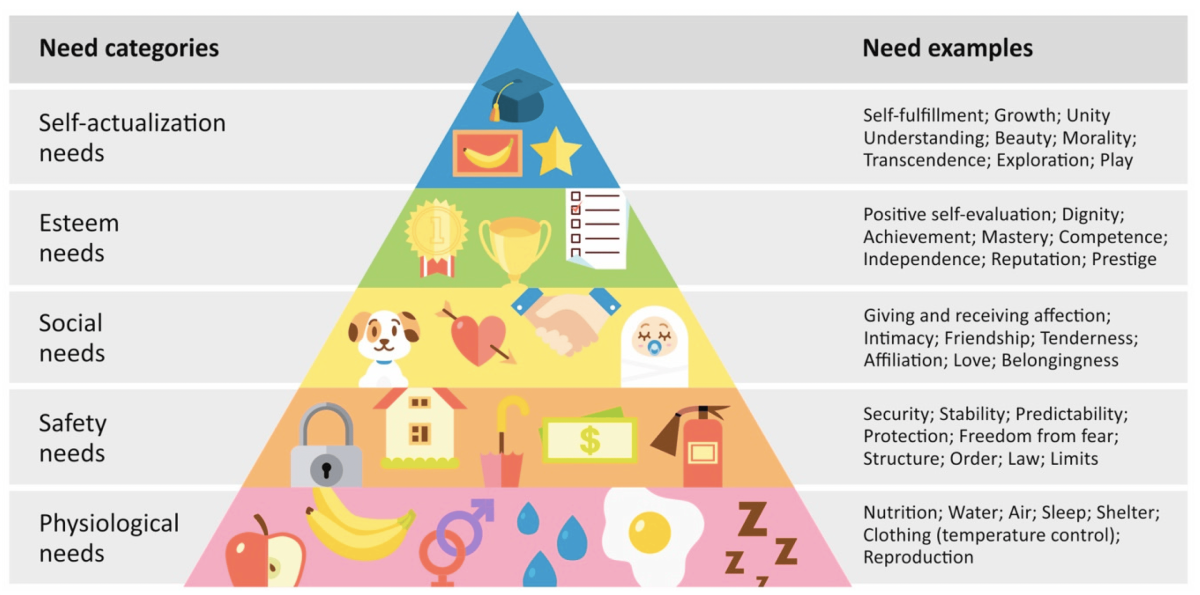
At Barton Primary school, we acknowledge that a culture of learning stems from students having the necessary social and emotional skills to flourish in a school environment. Maslow’s Hierarchy of Needs (pictured) explains that for students to reach their full potential, their basic needs must first be met.
Through SEL, students at our school develop resilience and emotion management, and learn how to build positive relationships while navigating challenges. This, in turn, allows them to better engage in school life and access the learning. Our SEL curriculum is supported by several programs and initiatives (Zones of Regulation, the eSmart Program and Resilience, Rights and Respectful Relationships) and is guided by and adapted to the needs presented within cohorts.
Zones of Regulation (ZoR)
The Zones of Regulation is a complete social-emotional learning curriculum, created by an Occupational Therapist to teach children self-regulation and emotional control. This program teaches a variety of social and emotional skills to children, starting with early emotional skills and advancing on to self-regulation and navigating social situations. Staff at Barton Primary School use this curriculum when teaching the ZoR to maintain consistency and accuracy with the language, strategies and supports that make up the ZoR framework.
The ZoR uses four colours (pictured) to help students self-identify how they are functioning in the moment given their emotions and states of alertness.
There are times where it is expected to be in each of the zones and times it would be unexpected.
- Blue Zone is used to describe low states of alertness (e.g. sad, tired, sick or bored) when our body and/or brain is moving slowly or sluggishly.
- Green Zone is used to describe a regulated state of alertness (e.g. calm, happy, focused or content). Being in the Green Zone shows control and is generally the zone we need to be in for schoolwork and being social.
- Yellow Zone is used to describe a heightened state of alertness (e.g. stressed, frustrated, anxious, excited, silly, nervous or confused). The Yellow Zone is starting to lose some control.
- Red Zone is used to describe extremely heightened states of alertness or very intense feelings (e.g. anger, rage, panic, terror or elation). Being in the Red Zone can best be explained by not being in control of one’s body.
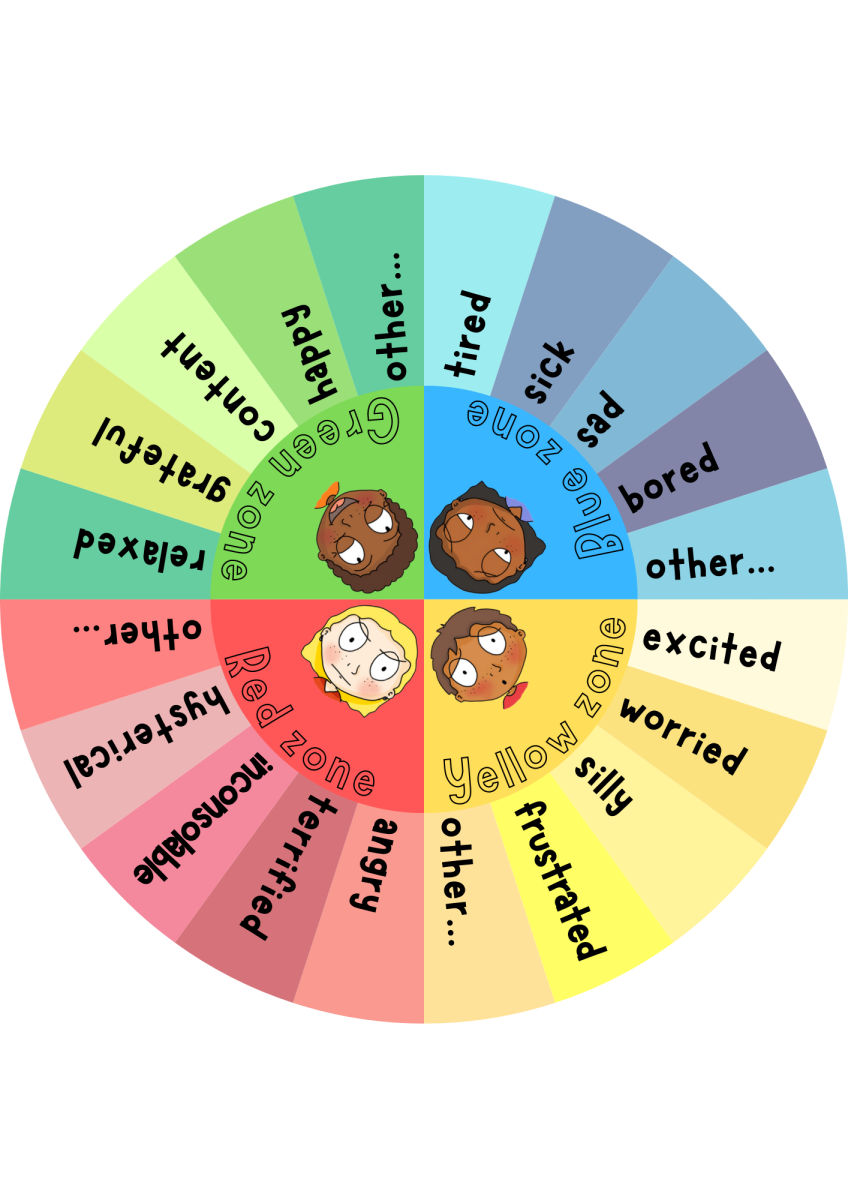
A core belief of the Zones of Regulation is that ‘all the Zones are okay’. People routinely experience several of the Zones across a day. We believe it’s critically important that we not convey the message that the Green Zone is the only acceptable Zone to be in. We acknowledge, accept, and support all emotions, and never make anyone feel like the Green Zone is the norm. The Zones of Regulation is not a behaviour management system or discipline model and at Barton Primary School we do not treat it as such.
The skills taught in the ZoR curriculum include:
- Vocabulary of emotional terms
- How to recognise their own emotions
- How to detect the emotions of others (read others’ facial expressions)
- What may trigger certain emotions
- How others may interpret their behaviour
- Problem solving skills
- Self-regulation
For more information about the Zones of Regulation by Leah M. Kuypers, please view the website.

Resilience, Rights & Respectful Relationships (RRRR)
At Barton Primary School, we are committed to fostering a safe, inclusive, and respectful learning environment for all students. As part of this commitment, we deliver the Resilience, Rights and Respectful Relationships (RRRR) curriculum, a Victorian Government initiative designed to support students’ social emotional learning and development of positive relationship skills. RRRR is a government-mandated curriculum that focuses on:
-
Emotional literacy – recognising and understanding our own and others’ emotions
-
Personal & cultural strengths – identifying character strengths to promote wellbeing
-
Positive coping – developing practical strategies to manage challenges
-
Problem-solving – building skills to resolve personal and social issues
-
Stress management – recognising stress and learning strategies to manage it
-
Help-seeking – knowing when and how to ask for help
-
Gender and identity – promoting respect and equality for all individuals
-
Positive gender relations – encouraging fairness and mutual respect
This curriculum is age-appropriate, evidence-based, and supports children’s wellbeing by equipping them with the tools to form respectful relationships, understand themselves and others, and contribute positively to their communities.
We understand that families may have questions. For further information from the Victorian Government, please visit:
If you have further questions or would like to discuss how the RRRR curriculum is implemented at Barton Primary, please contact our office.
For examples of the lessons being taught in the classroom, please use the following links to access the RRRR lesson plans:
Inclusion
Inclusion at Barton Primary School is a collective responsibility that goes beyond simply addressing disabilities; it involves meeting the diverse needs of all students, parents and the wider community. The approach emphasises celebrating differences while finding ways to foster connections among everyone. Clear adjustments are made to ensure that each student has the opportunity to engage and succeed. The underlying belief is that, with appropriate support and sufficient time, every student can grow.
Disability Inclusion
Disability Inclusion is rolling out to Victorian government schools between 2021 – 2025. In 2024, Barton Primary School moved to the Disability Inclusion model – a new approach to school based funding to help us improve support for our students and build a more inclusive school. Inclusive schools have better outcomes in learning, engagement and wellbeing for all students.
The Disability Inclusion Profile will help us to find out more about the strengths and needs of our students. It will inform funding allocations and help us to plan student learning and adjustments (see below for more information on adjustments). It is a collaborative, strengths based process between school staff, allied health/external experts and home. Our school can use this model to apply for funding for students with a disability, including students who may have not been eligible for individual funding through the Program for Students with Disabilities (PSD) in the past. We can use this funding for a range of activities including:
- Additional training, coaching and professional development for teachers and school staff
- Equipment and resources to support learning
- Additional staffing to help plan and deliver changes and adjustments for students
- More professionals in schools who are experts in disability
We will identify students who may benefit from having a Disability Inclusion Profile. If we consider that your child’s education will benefit from having a profile, we will contact you. The process can be quite lengthy as it requires extensive documentation from classroom teachers, wellbeing and relevant support staff including any external allied health professionals. At Barton, we are dedicated to ensuring that all of our students are receiving the support and adjustments they need to be successful.

Adjustments in the School Environment
At Barton Primary School, all possible actions are taken to enable all students to access and participate in school life. Adjustments reflect the assessed individual needs of the student. They can be whole school level, in the classroom or at an individual student level. Our school Inclusion Team ensures that materials and resources that support teaching and learning activities are always available. Examples of these adjustments include;
- Manipulatives
- Modified work
- Visuals
- Technology
- Sensory tools
- Extra breaks
- Calm spaces
- Additional adult support
By providing adjustments, Barton Primary School accesses and meets the functional needs of the student. This includes the impact of Communication, Mobility, Learning and Applying Knowledge, Self Care, General Tasks and Demands and Interpersonal Interactions, which link to the Disability Inclusion Profile process.
Community Hub
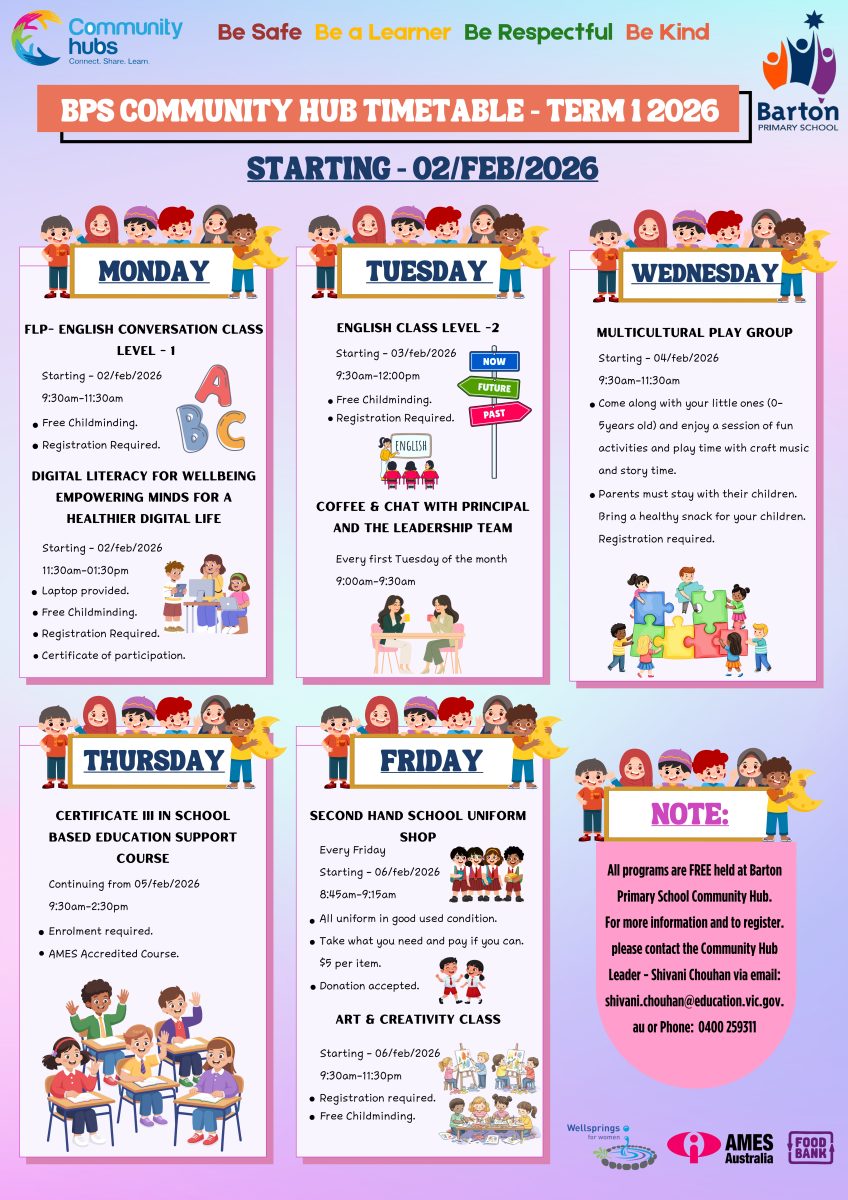
Welcome to the Barton Primary School Community Hub: A Place to Connect, Share, and Learn. Our Community Hub serves as a welcoming gateway for families to build connections both within our school and with the wider community while also accessing valuable support services. As part of the National Community Hubs Program, the Barton Primary School Community Hub is dedicated to supporting families, particularly mothers with pre-school children, by providing a space to connect, share experiences, and enhance their learning.
Our Focus Areas
At the heart of the Barton Primary School Community Hub are four key pillars:
- Early Childhood: We offer FREE playgroup and connect families to local early-years activities to support the growth and development of preschool children. These programs focus on enhancing children’s social skills, preparing them for school, and fostering a love of learning.
- Engagement: Our hub plays an essential role in helping families engage with both the school and the broader community, providing opportunities to build strong, supportive networks through a range of programs such as our Women’s Connection Circle.
- English: We offer migrants and refugees the opportunities to learn and practice English through both formal and informal programs. To support parents in their language learning journey, we provide free childminding, allowing parents to focus on acquiring new skills.
- Vocational Pathways: The hub provides opportunities for adults to explore vocational education and training, as well as volunteer opportunities, which help open pathways to employment. These programs empower families to enhance their skills and improve their career prospects.
Families participating in our hub can engage in a variety of activities, from playgroups and social “Coffee and Chat” sessions to language and vocational skill-building sessions. These activities are designed to improve participants’ confidence, strengthen social connections, and contribute to better educational outcomes. At Barton Primary School, we believe that a thriving partnership between families, the school, and the broader community is essential for helping children reach their fullest potential. Our Community Hub supports this partnership through innovative programs, social connections, and active parent involvement in their children’s learning.
For more information about the National Community Hubs Program, click here.
Student Wellbeing
Trauma-Informed Practice
Being trauma informed means recognising that some children and families in our school may have experienced trauma, either currently or in the past. We acknowledge how adversity and trauma can affect an individual’s behaviour, learning, and emotional wellbeing. Our school aims to establish safety, help children to manage emotions, facilitate connections and develop relationships. Trauma-informed practice involves setting clear boundaries and communicating expected behaviours while minimising punitive responses to these behaviours. It operates under the understanding that the behaviours we observe are frequently coping mechanisms developed by children in response to trauma. At Barton Primary School, we view behaviour as a form of communication and our goal is to equip children with effective strategies to manage overwhelming situations. We approach each student’s behaviour with curiosity, seeking to understand what they are expressing through their actions.
The challenges of modern teaching make it difficult to individualise every classroom process. Therefore, our school-wide trauma-informed classroom strategies offer resources to all students at a Tier 1 level. These practices include:
- Positive greetings at the door
- Morning meetings
- Preparing for transitions
- ‘Soft landings’
- Calm corners
- Strategies for co-regulation
- Ready to Learn
- SWPBS
For more information about trauma-informed practices in schools, please consider the Calmer Classrooms guide.
Youth Work
At Barton Primary School, we take pride in offering strong student wellbeing support, driven by our exceptional team of youth workers. Our innovative, evidence-based approach ensures children and young people have access to the tailored support they may need to thrive from Prep through to their transition into Year 7.
Our youth workers provide holistic support for both students and families through:
- One-on-one support to help students achieve personal and academic goals
- Small group interventions focused on building social and emotional skills
- In-class support to enhance learning and wellbeing outcomes
- Outreach assistance, extending care beyond the classroom when needed
- Referrals to local services to connect families with additional resources
- Family support, offering guidance and assistance along the journey
Our youth work team is committed to creating a safe, positive environment where every student can succeed. We go beyond standard practice, setting a benchmark in wellbeing support that others aspire to match.
Want to connect with our youth work team? Reach out to Sean at sean.newton@education.vic.gov.au for more information.